
01 Memory and learning
Sleep is involved in organising and strengthening memories (memory consolidation), especially when sleep is continuous and adequate.
Sleep is not only about how many hours you sleep, but also how continuous it is, your breathing, oxygen levels and how your body responds while asleep.
A sleep test records physiological data during sleep to support the assessment of sleep disorders — especially sleep apnea — and related problems where indicated.
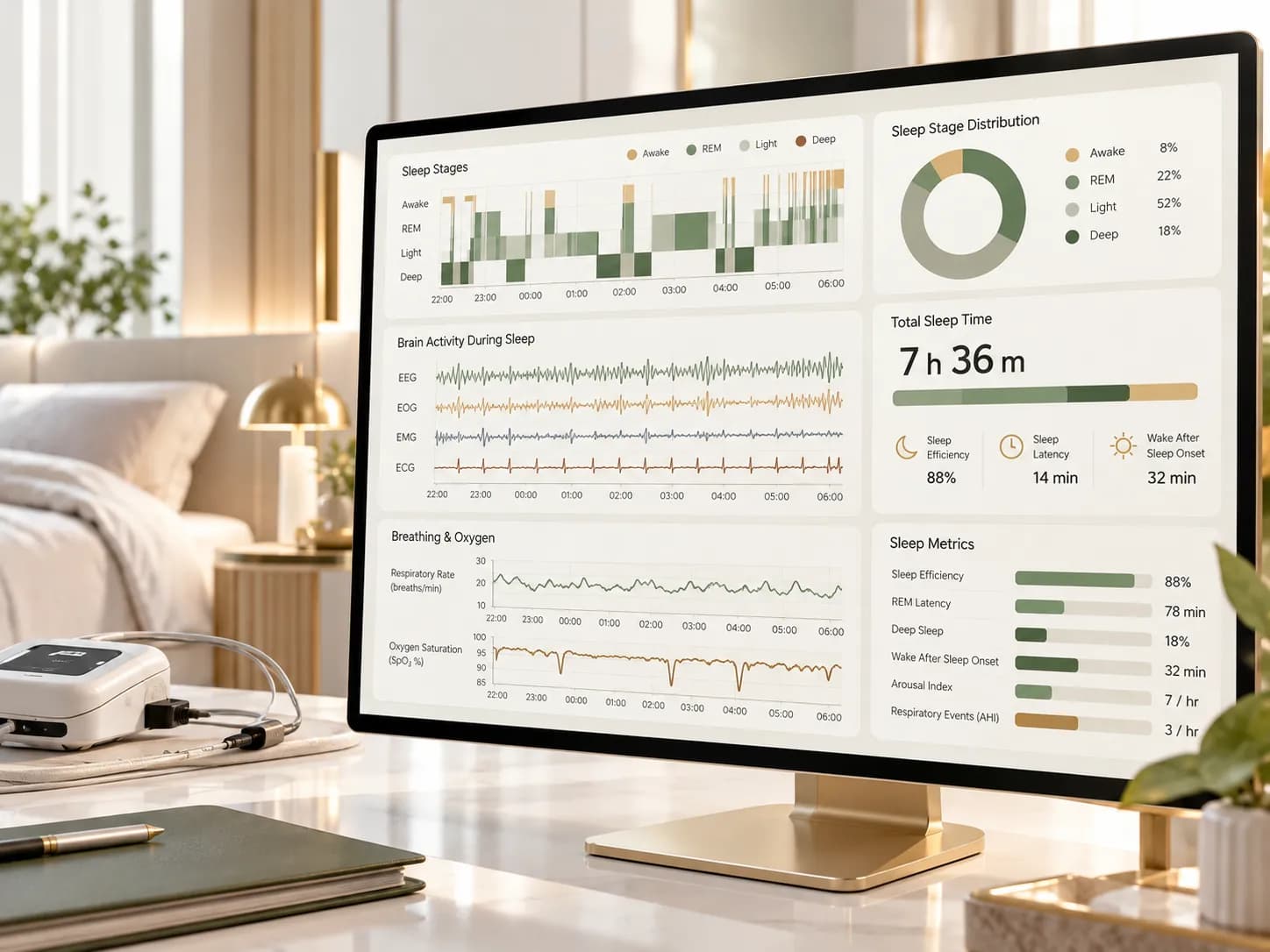
During sleep, the brain keeps working on processes that matter for many aspects of health.
Sleep is involved in organising and strengthening memories (memory consolidation), especially when sleep is continuous and adequate.
Too little sleep, or sleep that is often disrupted, may affect alertness, the ability to focus and responsiveness in daily life.
Sleep is linked to emotional regulation and the stress response, and sleep problems can occur alongside other health conditions.
Sleep is involved in regulating the autonomic nervous system, the cardiovascular system and the body's recovery.
Sleep problems don't always show up as insomnia — they can also be noticed in daytime symptoms or in what happens during sleep.
These symptoms don't mean everyone has sleep apnea, but they are a reason to see a doctor about further assessment.
The data recorded depends on the type of test and the device used.
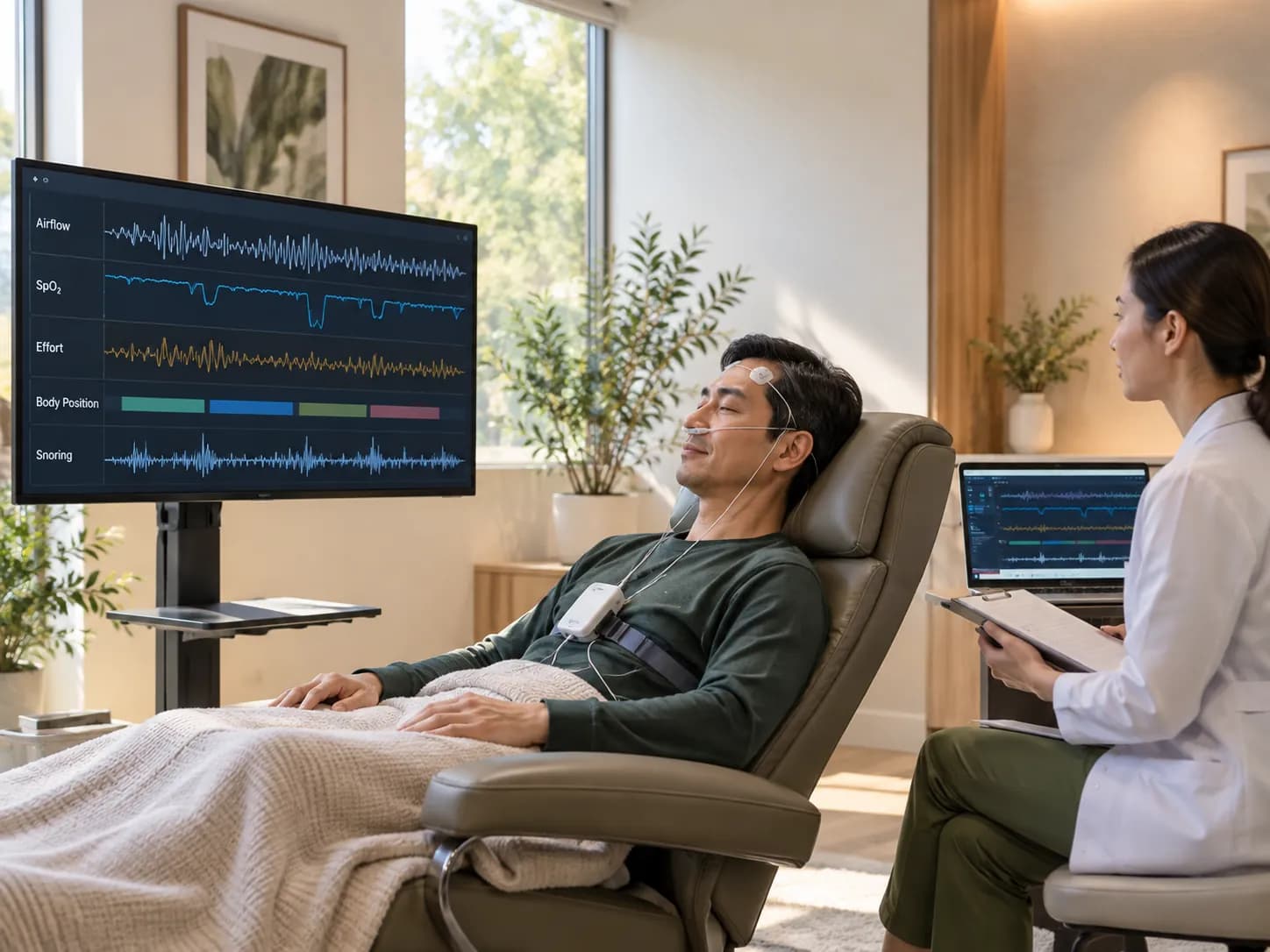
Records airflow or breathing effort to assess abnormal breathing events during sleep.
Tracks changes in blood oxygen during sleep, especially events that may be linked to abnormal breathing.
Records heart rate or cardiac signals depending on the device, to support physiological assessment.
Some devices can record sound or signals related to snoring to support analysis of events during sleep.
Some tests can record body position or movement to support the assessment.
Polysomnography (PSG), which records EEG together with other signals, can assess sleep stages and awakenings during the night.
Note: a typical home sleep apnea test (HSAT) does not measure sleep stages with EEG in the same way as PSG, so HSAT data should not be used to claim analysis of every sleep stage.
A multi-system sleep study, usually done in a sleep lab that monitors many physiological signals such as EEG, eye movement, muscle activity, breathing and oxygen level.
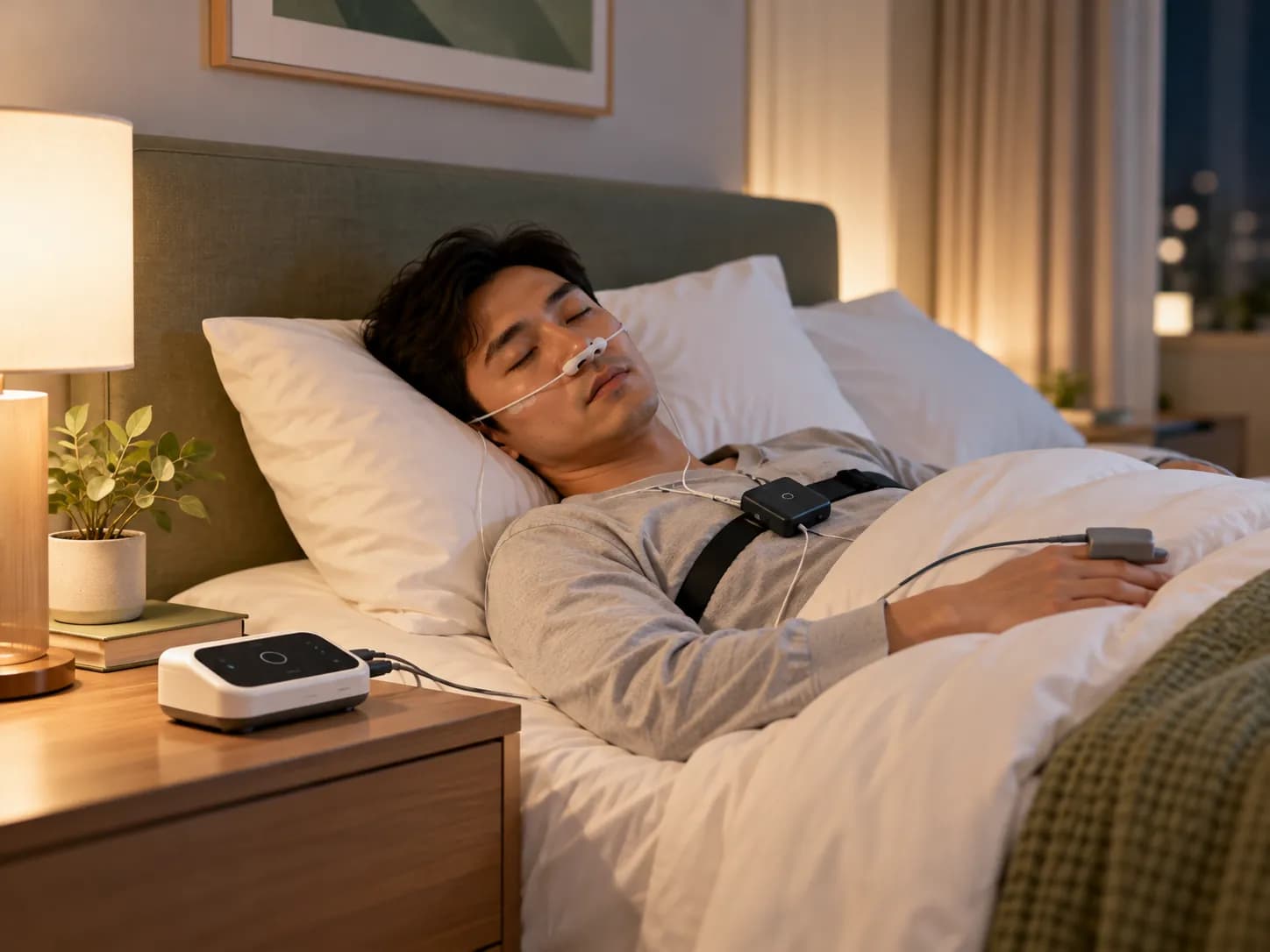
A test done at home that focuses on obstructive sleep apnea, using a device that records breathing-related signals and oxygen level depending on the device type.
Limitation: HSAT is not suitable for everyone, and a normal result does not always rule out sleep apnea. If clinical suspicion remains, the doctor may consider PSG.
Disrupted sleep may be linked to daytime symptoms such as sleepiness, reduced concentration or feeling unrefreshed.
In people with sleep apnea, intermittent drops in oxygen and repeated arousals during the night may occur, which are linked to attention and some cognitive processes.
However, symptoms such as brain fog or reduced memory can have many causes. A sleep test does not diagnose these symptoms directly, but helps assess sleep disorders that may be a contributing factor.
We take your sleep history, snoring, daytime sleepiness, health history and risk factors to decide whether testing is appropriate.
The doctor chooses the type of test, such as PSG or HSAT, based on symptoms, risk and indications.
The device is fitted and physiological data is recorded during sleep using the chosen method.
Breathing events, oxygen levels and other data are analysed within the scope of the device, taking signal quality into account.
The doctor explains the results together with your history and symptoms, and considers whether further tests or a care plan are needed.
Sleep is an important process linked to brain function, memory, attention and physical recovery. A sleep test gives doctors physiological data about sleep to support the assessment of a suspected disorder.
The American Academy of Sleep Medicine (AASM) clinical practice guideline states that polysomnography is the standard method for diagnosing obstructive sleep apnea, and that home testing may be considered for some people where indicated.
Research in The Lancet Respiratory Medicine also describes the relationship between sleep apnea and brain function, especially effects that may be linked to disrupted sleep and intermittent drops in blood oxygen.
A sleep test is therefore one tool for assessing sleep health; the type of test must be chosen, and the results interpreted, together with history, symptoms and medical assessment.
Kapur VK, et al. (2017). Clinical Practice Guideline for Diagnostic Testing for Adult Obstructive Sleep Apnea: An American Academy of Sleep Medicine Clinical Practice Guideline. Journal of Clinical Sleep Medicine, 13(3), 479–504.
Australasian Sleep Association 2024 Guidelines for Sleep Studies in Adults. Sleep Medicine. (2024).
Rosenzweig I, et al. (2015). Sleep Apnoea and the Brain: A Complex Relationship. The Lancet Respiratory Medicine, 3(5), 404–414.
Smith MT, et al. (2018). Use of Actigraphy for the Evaluation of Sleep Disorders and Circadian Rhythm Sleep-Wake Disorders. Journal of Clinical Sleep Medicine, 14(7), 1231–1237.
Feeling unrefreshed can have many causes. If it persists, especially with snoring, interrupted breathing or marked daytime sleepiness, see a doctor to assess whether a sleep study is needed.
PSG is the standard method for diagnosing sleep apnea. HSAT can be used to assess obstructive sleep apnea in some adults where indicated.
Not everything. The results give physiological data depending on the device, but your experience of sleep, how refreshed you feel and other health factors still need to be assessed together.
It cannot diagnose brain fog directly, but it helps assess some sleep problems that may be related to the symptom.
If you snore, wake unrefreshed or suspect your sleep may be affecting your daily life, seeing a doctor to assess your sleep is the right place to start. At ZENITH Neuro Wellness we understand health from data, not just how you feel, to plan personalized care.