Polysomnography — PSG
A sleep study that records several body systems at once, which may include brain waves, eye movements, muscle activity, breathing, oxygen levels and other signals according to the test protocol.
Sleep is not only about the number of hours — it also involves the quality of rest, breathing during sleep and how the body functions at night.
If you sleep poorly, wake often, snore, feel sleepy during the day or wake up unrefreshed, a sleep assessment can add information about your sleep patterns and related factors.
ZENITH Neuro Wellness offers sleep assessments for adults, choosing the type of test based on your symptoms, health history and individual suitability.
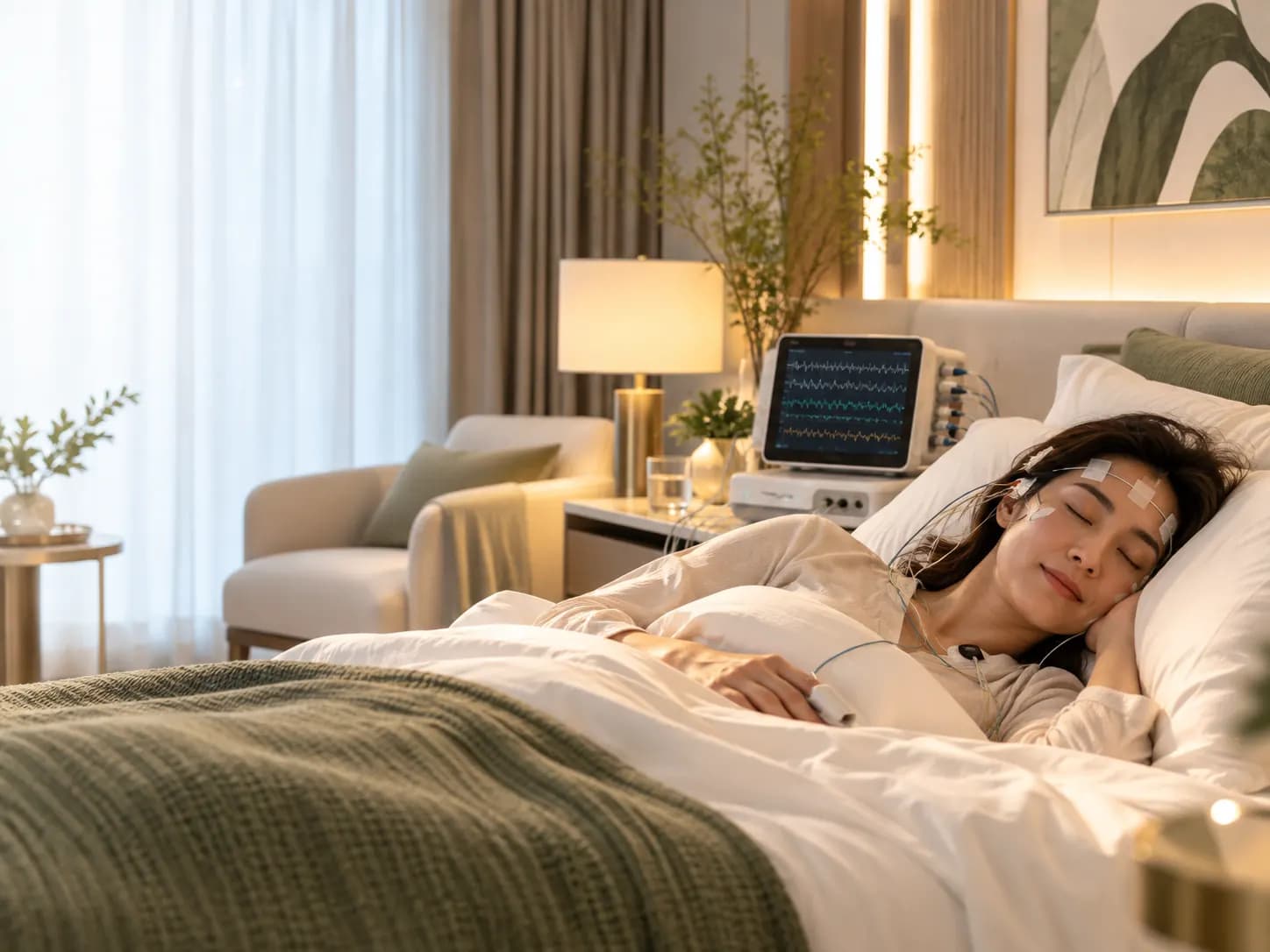
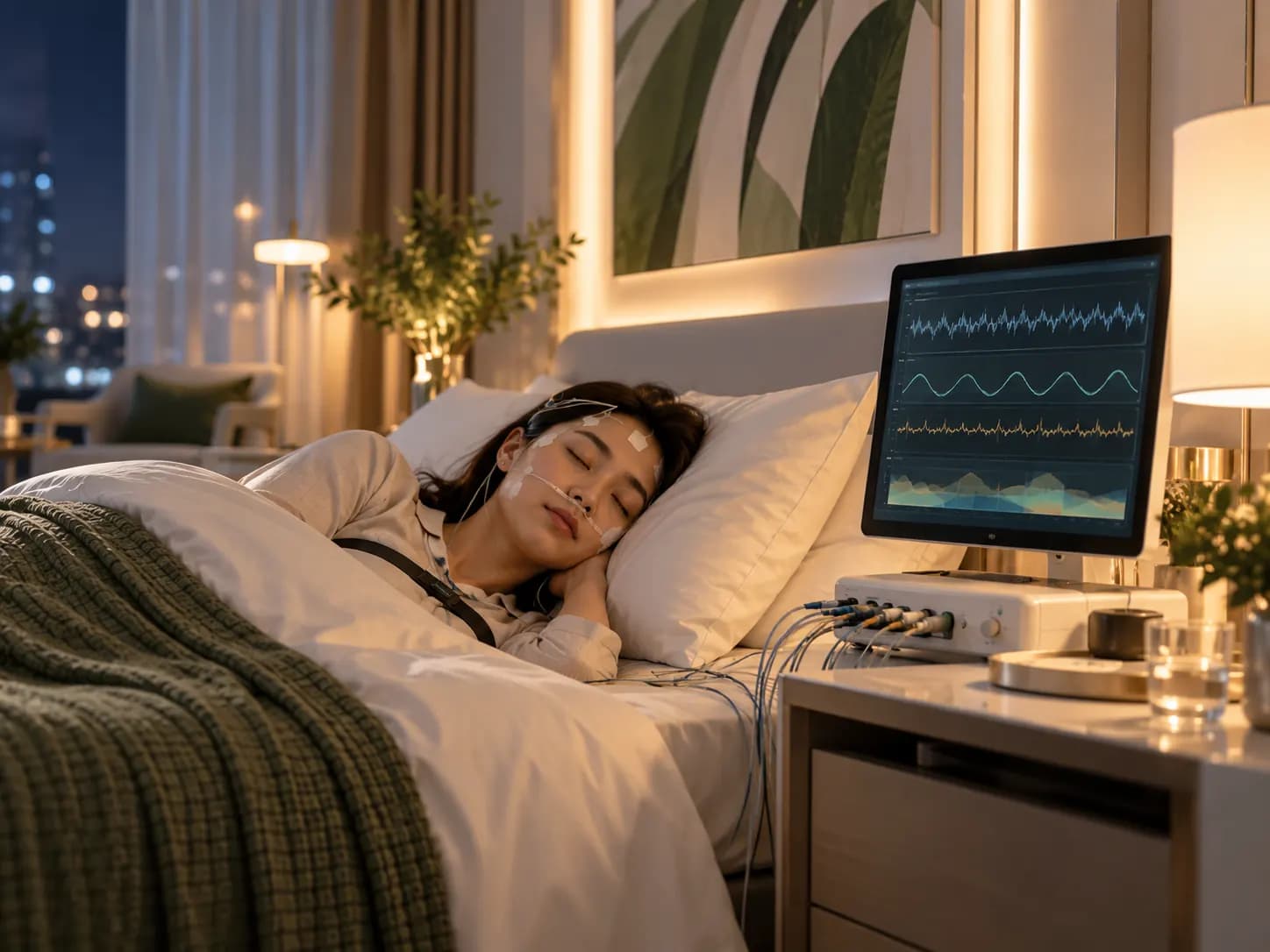
Some people spend many hours in bed yet still wake up tired, sleepy or unrefreshed.
During sleep, several things can happen without our awareness — such as abnormal breathing, repeated brief awakenings or changes in certain physiological signals.
A sleep assessment adds information you cannot get from how you feel after waking alone. Sleep testing can provide information on
The data recorded varies with the type of test and equipment used.
A sleep test records physiological data during sleep, and what is measured depends on the type of test. It may be used to support the assessment of sleep-related breathing disorders or certain sleep problems as indicated. Common types include
A sleep study that records several body systems at once, which may include brain waves, eye movements, muscle activity, breathing, oxygen levels and other signals according to the test protocol.
A home test for certain adults with symptoms or risk of obstructive sleep apnea, recording breathing and related signals depending on the device used.
Choosing PSG or HSAT depends on symptoms, health history and clinical indications — not every test suits everyone.
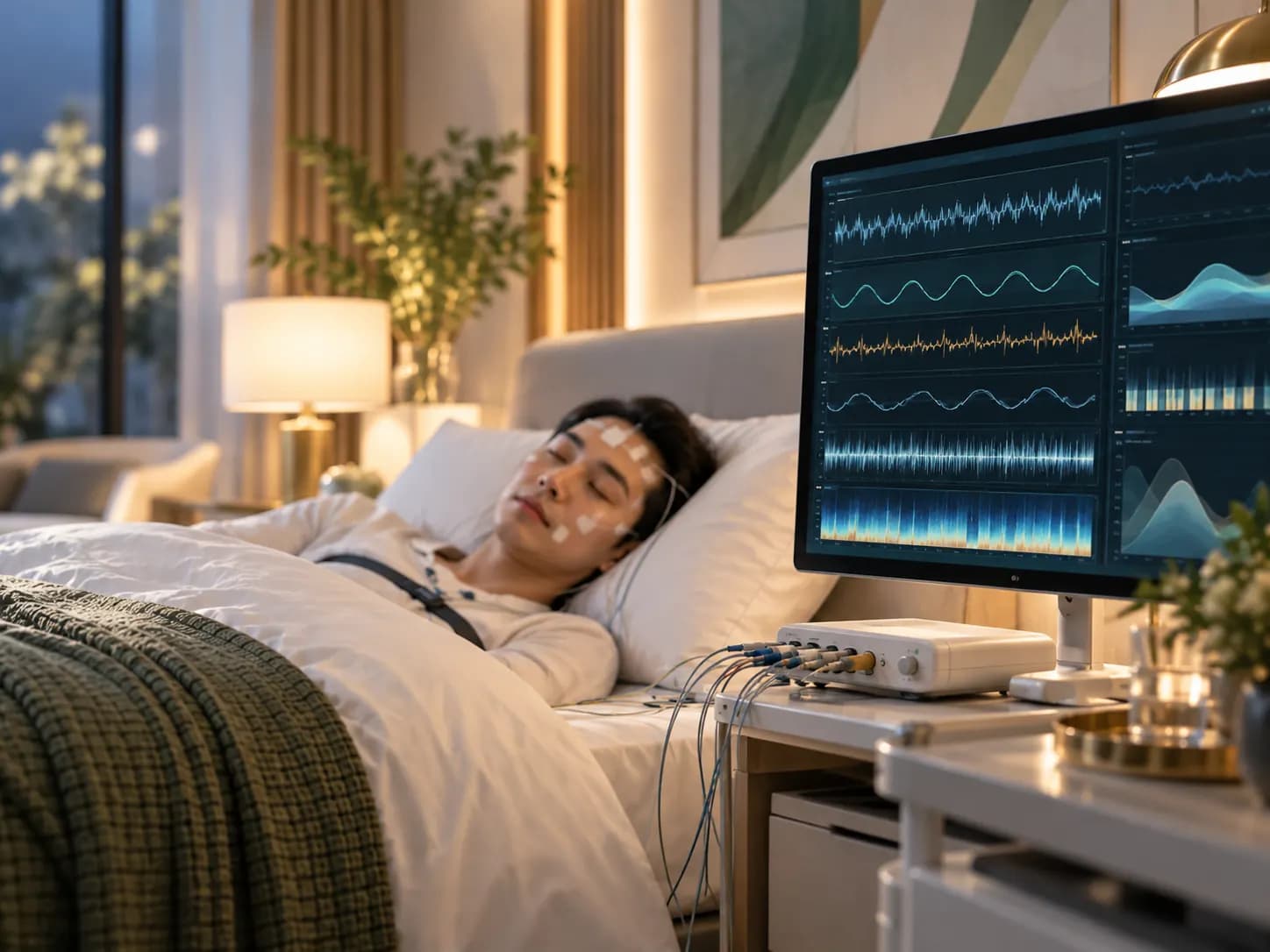
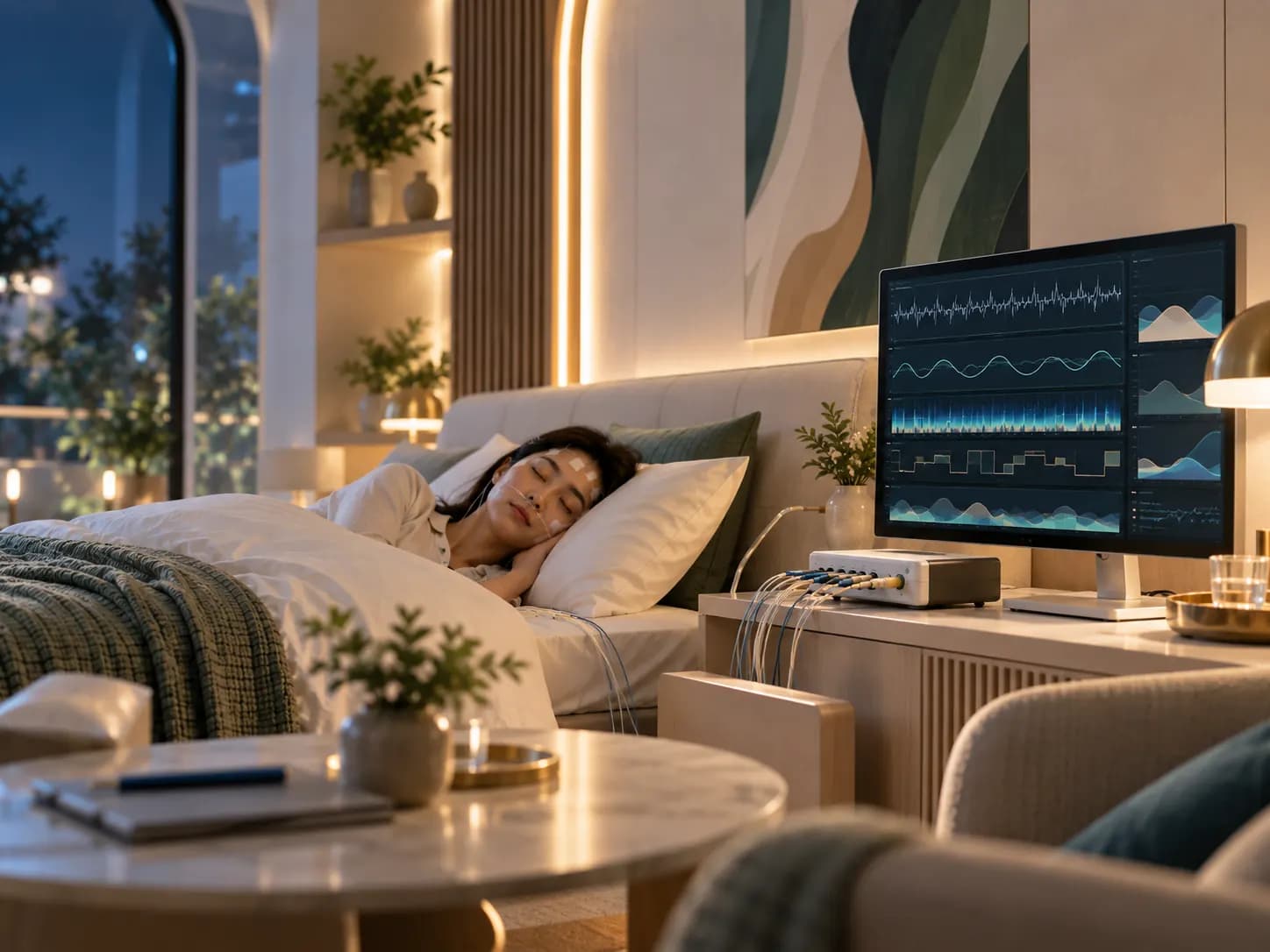
What is actually measured depends on the type of sleep test and the equipment chosen.
An assessment may be considered for adults with symptoms or concerns such as
Especially loud snoring, or when someone notices abnormal breathing during sleep
These should be assessed further to identify related causes
Even after sleeping long enough
Feeling that sleep does not let your body fully rest
Especially when ongoing or affecting daytime life
Wanting more information about your own sleep patterns
These symptoms have many possible causes and do not always mean a person has sleep apnea.

We gather information on your sleep patterns, night-time and daytime symptoms, health history, medications and other relevant details.
The type of sleep test is chosen by symptoms and suitability — in a testing facility or at home when indicated.
Sensors and devices are fitted for the type of test, and signal quality is checked.
The device records physiological data throughout the set period.
Recorded data is considered together with your history, symptoms and relevant health information.
If findings warrant further assessment, next steps are considered based on your symptoms and indications.
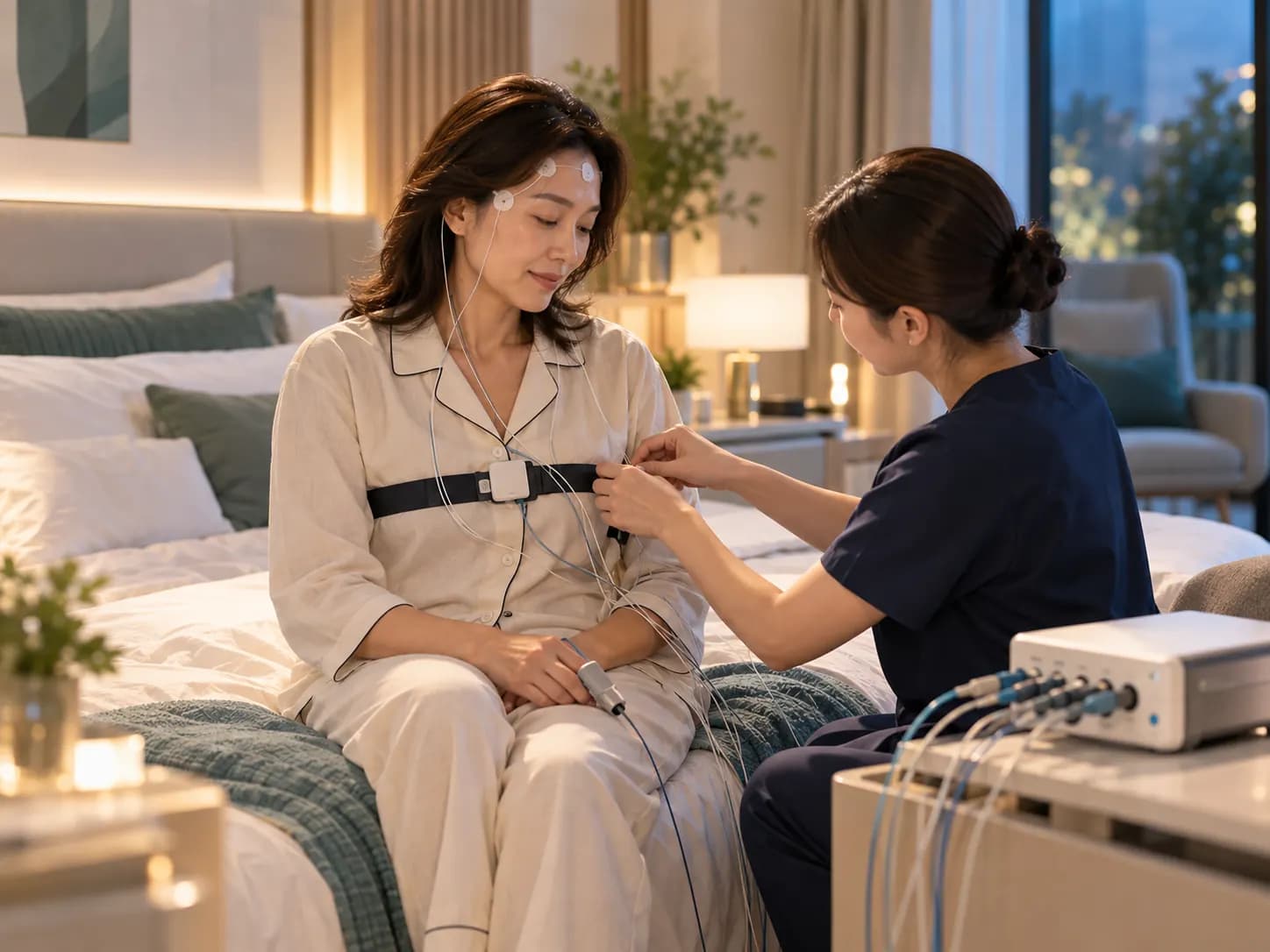
Suitable for some adults with symptoms and risk of obstructive sleep apnea who do not have certain health conditions requiring more detailed testing. It records sleep in a familiar environment, but the data it captures is more limited than polysomnography.
Records more body systems and can provide detail on sleep stages, breathing, movement and many physiological signals according to the protocol used.
The AASM recommends both PSG and HSAT as options for diagnosing obstructive sleep apnea in adults without certain complicating conditions who show signs of risk. If HSAT is negative, inconclusive or technically inadequate, polysomnography may be needed.
Insomnia can have many causes, and a detailed sleep history is a key part of the assessment.
Polysomnography is not a routine test for everyone with insomnia, but it is indicated in some cases — for example when a sleep-related breathing disorder or certain movement disorders are suspected.
So choosing a test should start with the question “What do we need to learn about your sleep?” rather than giving everyone the same test.
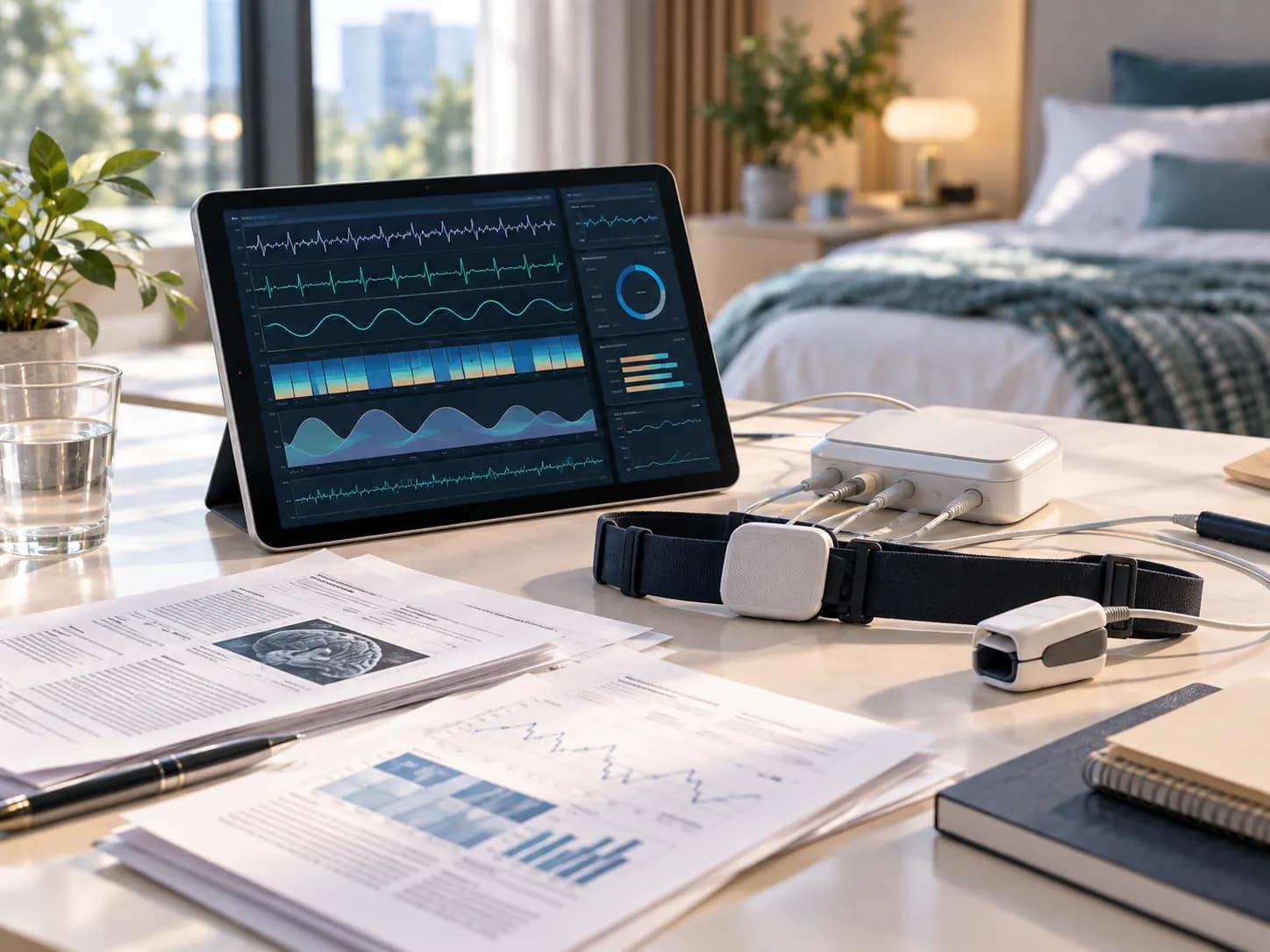
The American Academy of Sleep Medicine (AASM) publishes clinical practice guidelines for assessing, diagnosing and managing sleep disorders, developed from systematic evidence reviews using the GRADE process to rate evidence quality.
Polysomnography — the standard method for assessing many sleep disorders as indicated, providing data from several physiological systems during sleep.
Home Sleep Apnea Testing — the AASM states HSAT can be used as an alternative to polysomnography in adults without certain complicating conditions who show signs of risk for obstructive sleep apnea, but it should not be used for general screening of people without symptoms, and automated analysis alone should not drive medical decisions.
Sleep involves many systems in the body, so assessing a sleep problem may mean considering other information as well, such as
This information places your sleep assessment in the context of your overall health.
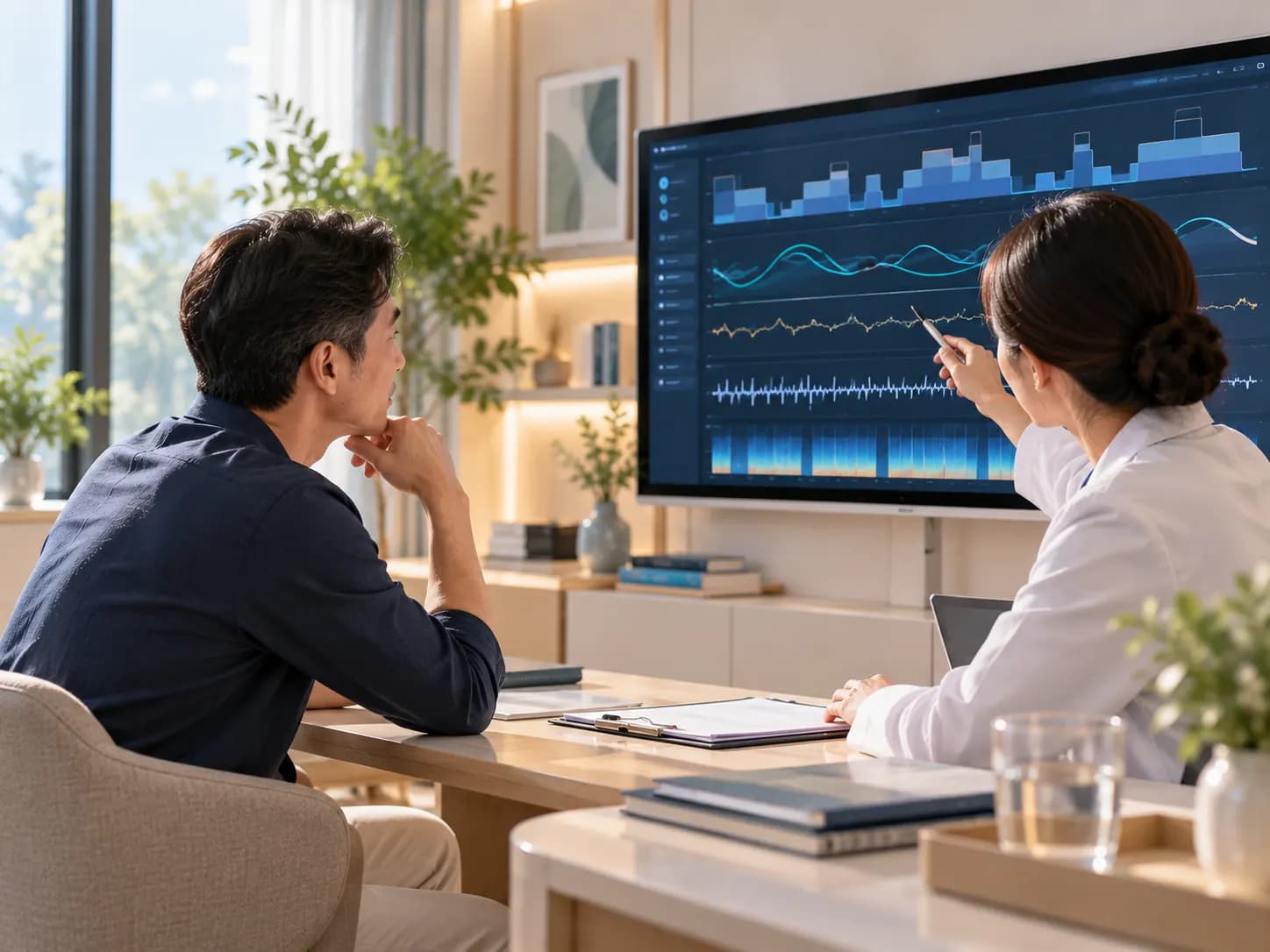
It depends on the type of test. It may record breathing, oxygen levels, heart rate, snoring and movement — plus brain waves and sleep stages in the case of polysomnography.
It depends on the type of test. Some assessments can be done at home, while others require more detailed equipment and recording.
No. Insomnia has many causes, and the choice of test depends on your history, symptoms and indications.
Not always. Snoring can occur without obstructive sleep apnea, and some people with sleep apnea have other symptoms, so further assessment is needed.
An HSAT result should not be relied on alone in every case. If it is negative, inconclusive or insufficient but clinical suspicion remains, polysomnography may be considered.
Sleep tests generally use external sensors to record data and are non-invasive.
If you snore, wake during the night, feel sleepy in the day, wake unrefreshed or have concerns about your sleep quality, ask us about a sleep assessment to find the test that suits your symptoms and health information. The choice of test depends on each person's history, symptoms and indications, and results should be considered together with relevant health information.