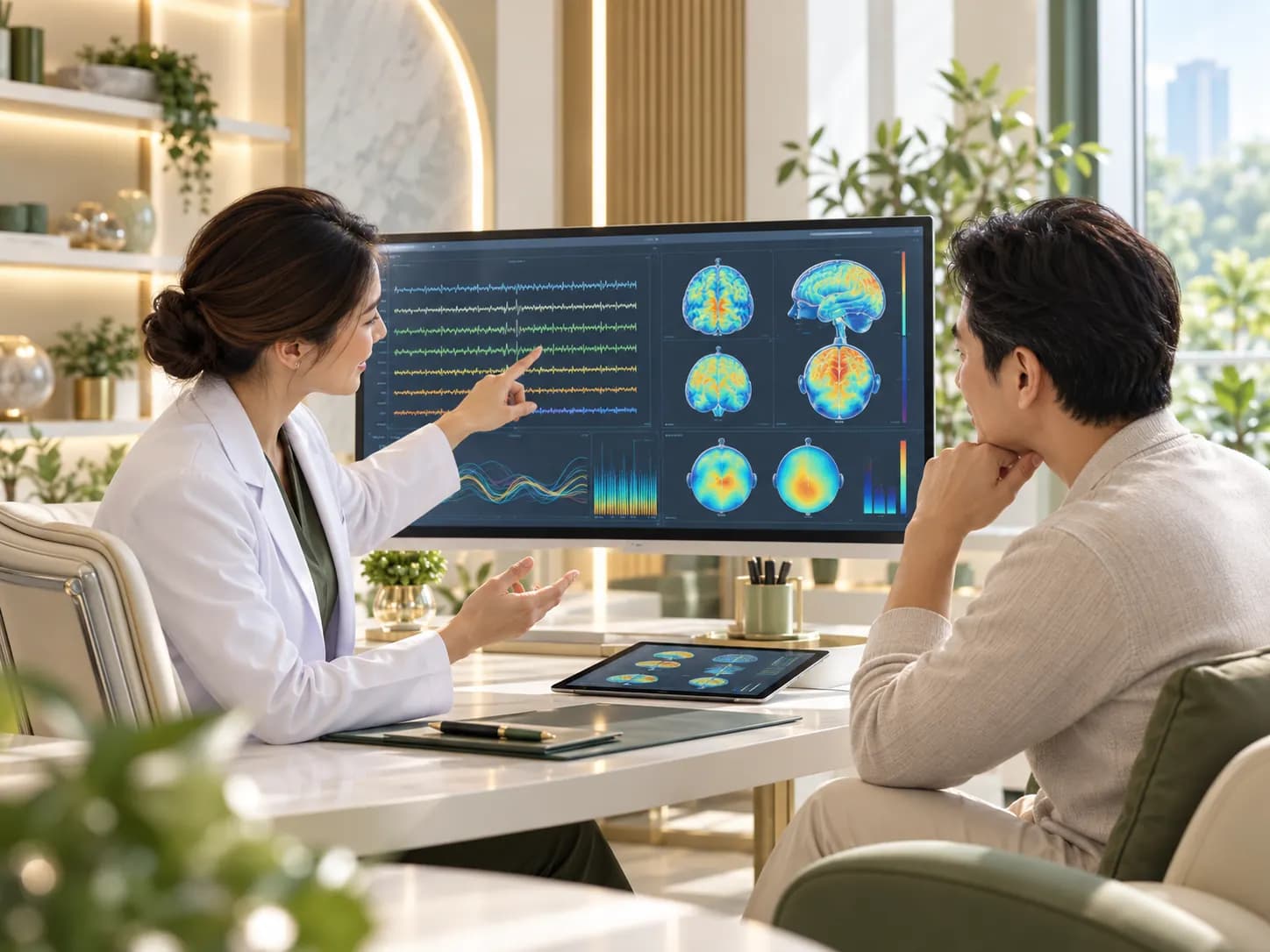
EEG — Records electrical brain activity
EEG (electroencephalography) records the brain's electrical activity through sensors on the scalp. It is a non-invasive test.
Reduced concentration, changes in memory, poor sleep, unclear thinking or ongoing stress can be linked to many health factors.
ZENITH Neuro Wellness uses the NDS (Neuro Delineation System) together with EEG and quantitative analysis (qEEG) to record, process and display the brain's electrical activity.
The results are considered alongside your health history, symptoms, sleep, lifestyle and other relevant information, for a more complete picture of your brain health.
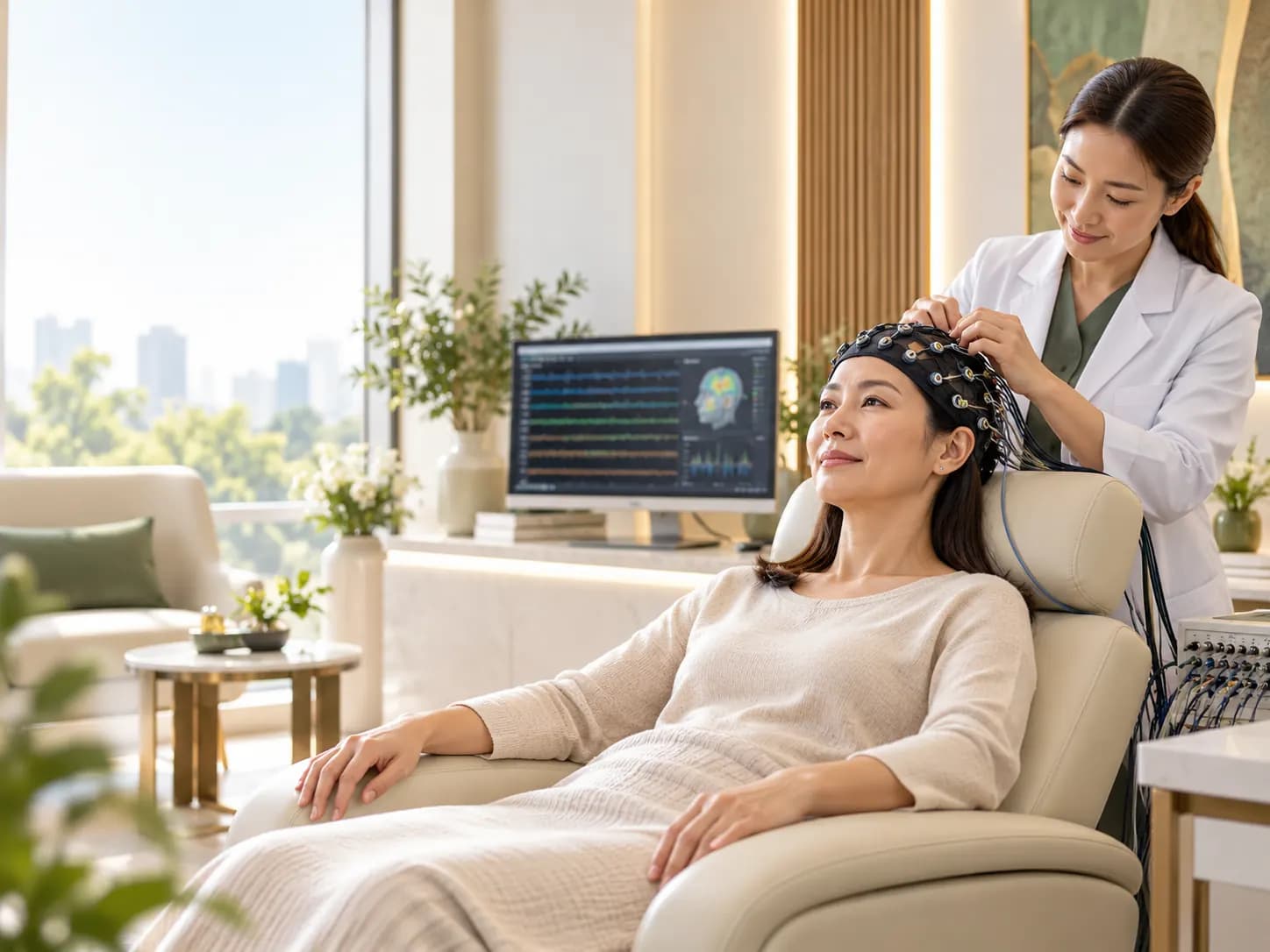
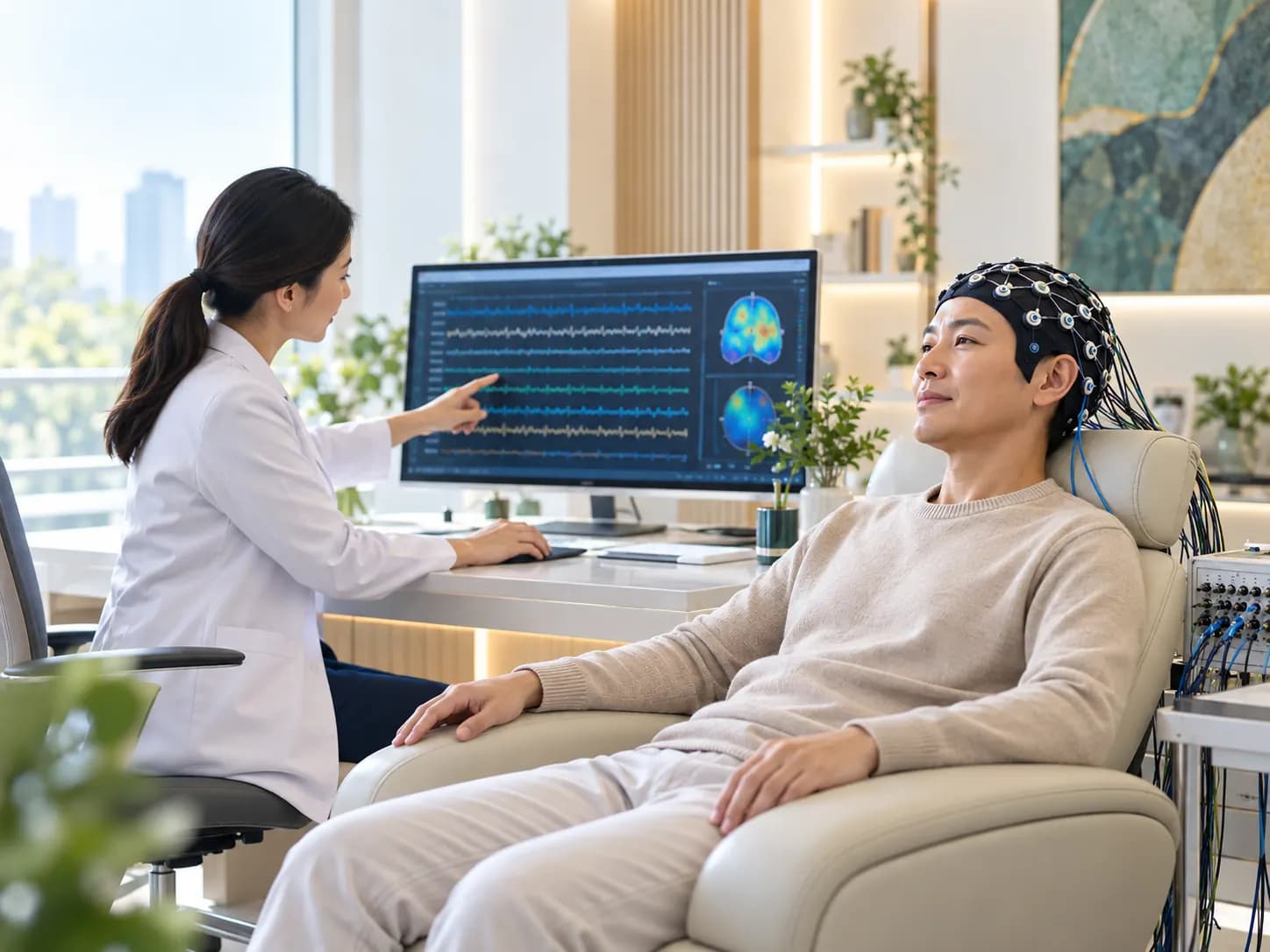
Because what you feel may not reflect everything about how your brain is working
Concerns with concentration, memory, sleep, stress or brain fog can arise from many factors.
Assessing symptoms and health history is essential. At the same time, EEG adds information from the brain's electrical activity actually recorded during the test.
Brain wave assessment helps to
Brain wave testing is one part of the assessment process — qEEG results are never used on their own to diagnose a health condition.
EEG (electroencephalography) records the brain's electrical activity through sensors on the scalp. It is a non-invasive test.
qEEG (quantitative EEG) processes EEG data with mathematical and computational methods to analyze certain signal characteristics, such as frequency and power.
NDS (Neuro Delineation System) processes EEG data and presents it visually, making complex data patterns easier to review.
NDS images are visualizations built from EEG signals — they are not structural brain images like MRI or CT.
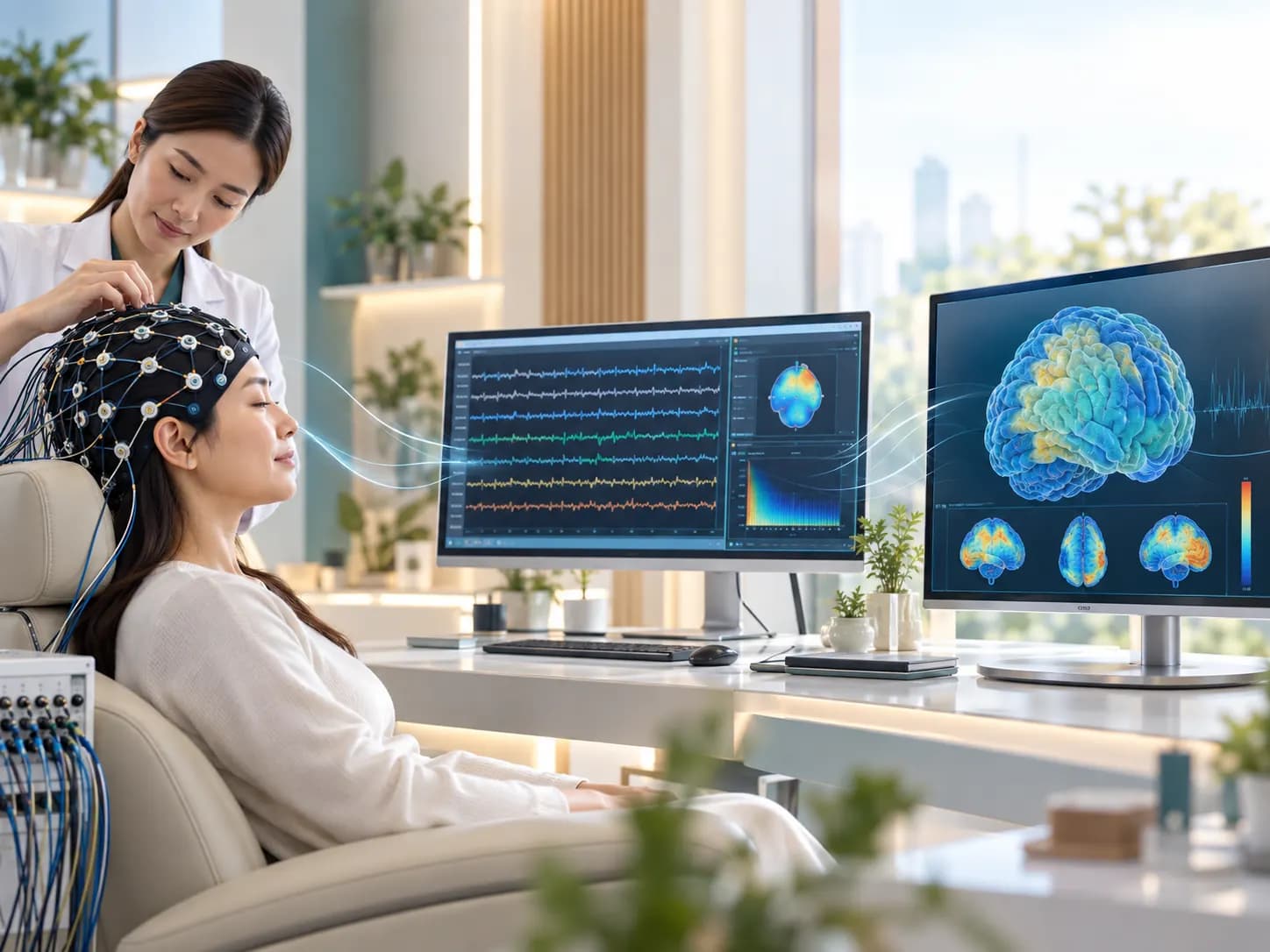
qEEG organizes EEG data quantitatively so that certain signal characteristics can be reviewed systematically, analyzing brain wave activity across frequency bands such as
Low-frequency activity that is prominent in certain stages of sleep
Activity in the theta band, which can be seen in many states of brain function
Activity typically seen when awake and relaxed, especially with eyes closed
Activity associated with wakefulness and many kinds of brain function
High-frequency activity studied in research on brain processes
The meaning of each band should not be read from a single value — it must be considered together with location, pattern, state during the test and other relevant information.
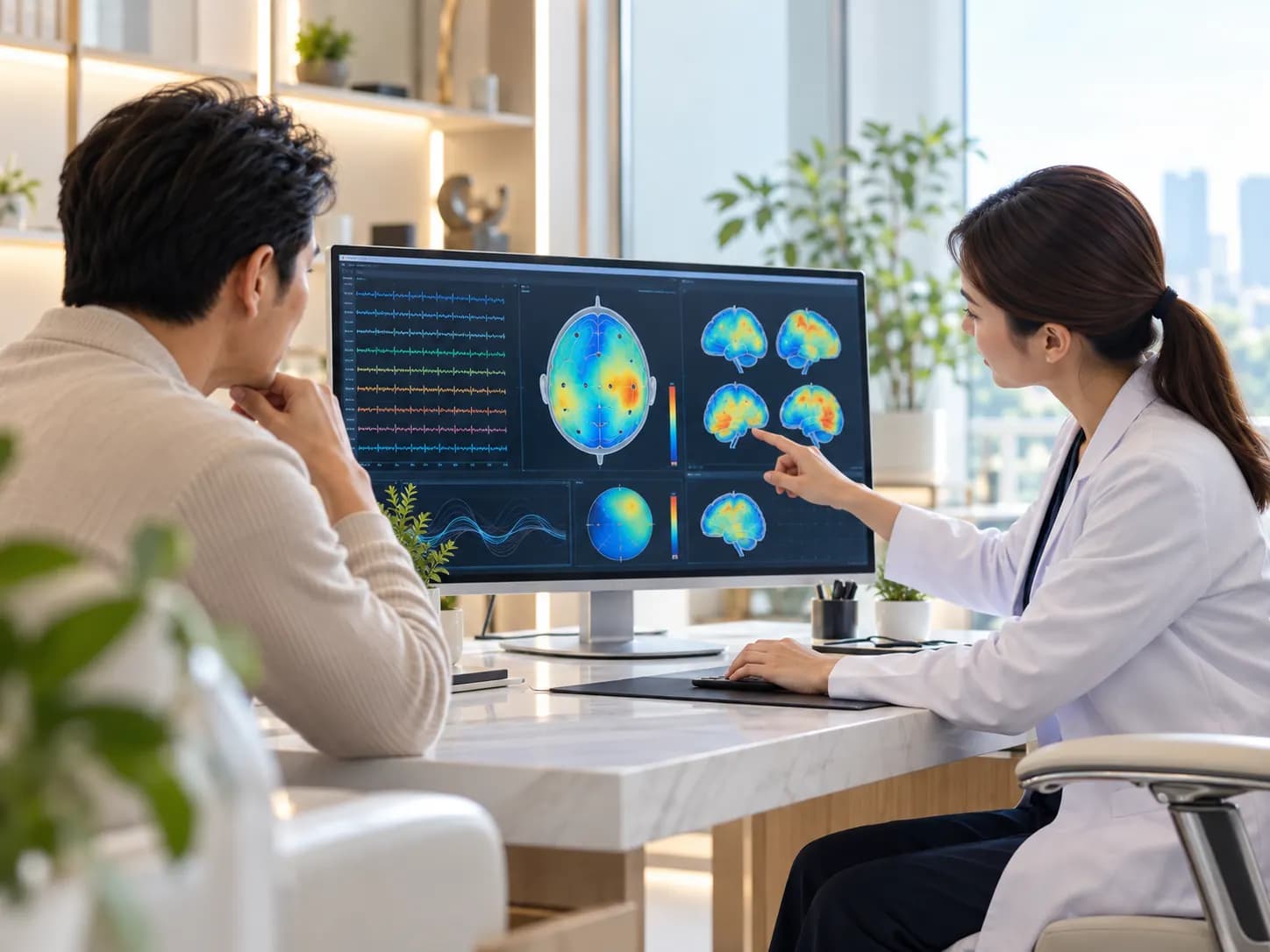
EEG data contains a large number of signals. Presenting it as graphs, diagrams or visualizations makes data patterns easier to see.
NDS presents processed data in forms that support review, such as
Visual displays do not show brain structure directly — they are visualizations built from the brain's electrical activity.
The test may add information for adults with concerns about
Feeling less focused, finding it hard to concentrate, or noticing changes in work performance
Feeling that memory or recall has changed
Thinking feels unclear or slower, or the mind feels less fresh
Not sleeping well, waking unrefreshed, or having trouble resting
Ongoing stress that affects daily life or work
Wanting more information to support an assessment of your brain health
These symptoms have many possible causes, and they do not always mean an abnormality will be found on EEG or qEEG.

We gather your health history, symptoms, sleep patterns, medications and other information that may affect the results.
EEG equipment and scalp sensors are placed at defined positions, and signal quality is checked before recording.
The brain's electrical activity is recorded according to the protocol while you are in a suitable state for the test.
The EEG data goes through signal quality checks and quantitative processing.
Processed data is displayed as visualizations to help review data patterns.
Results are considered together with your symptoms, health history, sleep and other relevant information.
A non-invasive test
EEG picks up electrical activity from the scalp through sensors. A standard EEG procedure generally involves
After the test you can generally return to your normal routine, unless advised otherwise for your type of test.
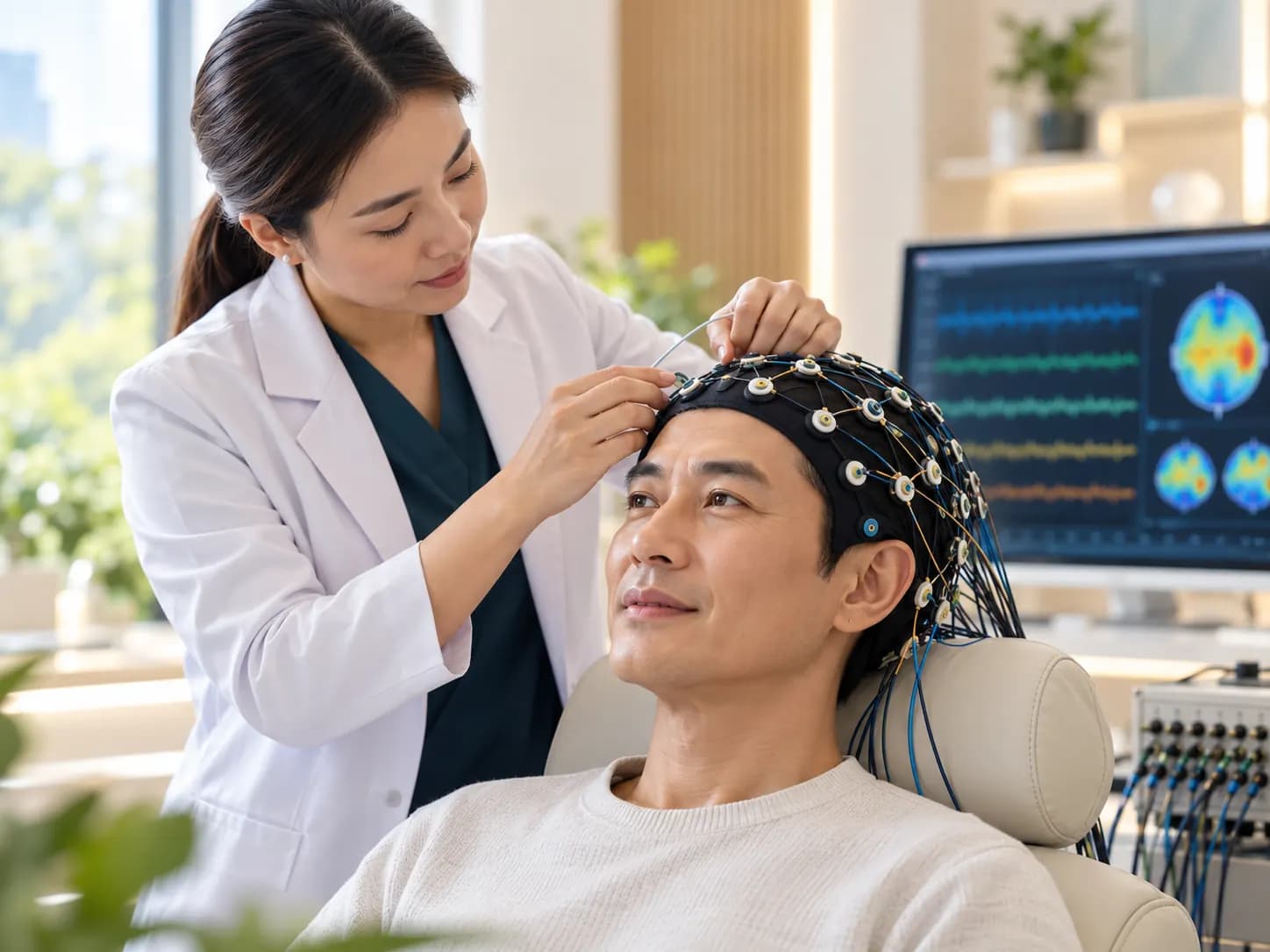
To record a good-quality signal, you should
Preparation details may vary with the test protocol.
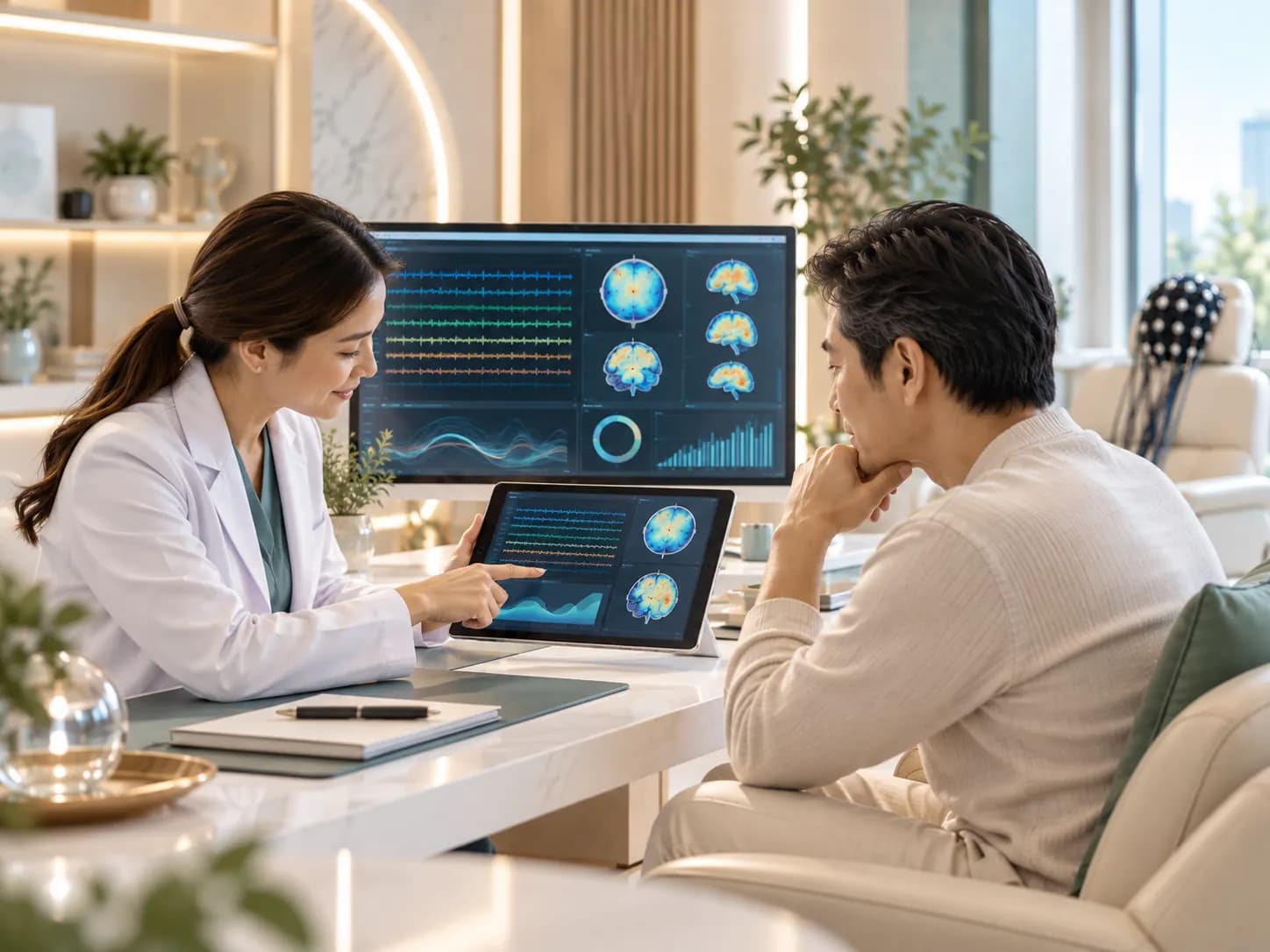
Brain wave results are one part of your health picture, so ZENITH Neuro Wellness considers many kinds of information together, such as
This information is brought together to support an assessment suited to each individual.
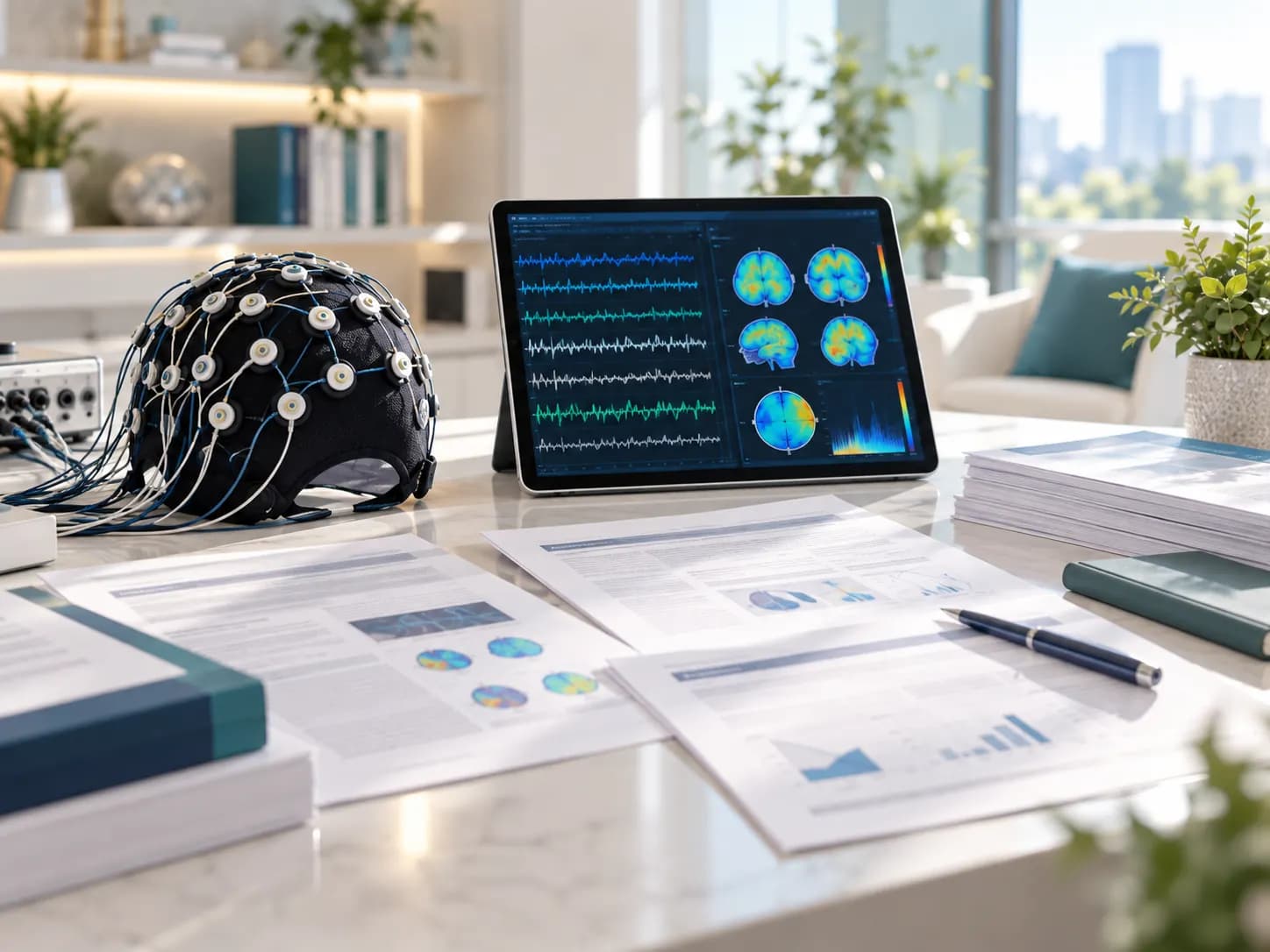
EEG is a method of recording the brain's electrical activity with established standards for testing, electrode placement, recording and reporting. The American Clinical Neurophysiology Society publishes guidelines for clinical EEG and technical standards.
qEEG adds another dimension to EEG analysis — quantitative EEG uses computer processing to analyze characteristics of EEG data, such as frequency, signal power and various quantitative displays.
However, quantitative analysis should be considered together with the raw EEG and clinical information. Visualizations or statistical values should not be used on their own to draw conclusions about health.
The key principle: Raw EEG + Quantitative Analysis + Health Information — not qEEG Result = Diagnosis
NDS images are visualizations built from the brain's electrical activity recorded by EEG and processed by the system, so they should not be read as structural images of the brain.
Each method has different purposes and indications, and one cannot automatically replace the other.
EEG records the brain's electrical activity, while qEEG processes that EEG data quantitatively using mathematical and computational methods.
NDS (Neuro Delineation System) is a system that processes EEG data and displays it in ways that make data patterns easier to review.
No. NDS images are visualizations built from EEG data — they are not structural brain images like MRI or CT.
EEG does not use X-rays. It receives electrical signals from the scalp through sensors.
EEG and qEEG results must be considered together with symptoms, health history and other clinical information. qEEG results should not be used on their own to diagnose a condition.
It depends on your goals, symptoms and care plan. Repeat testing is considered case by case.
If you have concerns about concentration, memory, sleep, brain fog, stress or brain function, ask us about NDS and qEEG testing to find the assessment that suits you. Test results are one part of a health assessment and should be considered together with your history, symptoms and other clinical information.