
01 Brain Signal Monitoring
EEG signals are measured from the scalp using appropriate equipment.

Neurotherapy is an approach focused on the brain and nervous system. It may include EEG neurofeedback, a form of training in which clients learn to adjust patterns of brain activity through real-time feedback.
An EEG device records electrical signals from the scalp and converts them into feedback, such as images, sounds or on-screen activities, to help the person learn to respond to those signals.
This method measures signals and uses feedback for training; it does not send electrical current into the brain.
Neurofeedback has been studied in several clinical areas, but effectiveness varies with the purpose, training method and individual health condition.
EEG neurofeedback uses feedback learning: measured EEG signals are converted into images or sounds according to defined conditions. The process generally includes:
EEG signals are measured from the scalp using appropriate equipment.
The system processes the signals and presents feedback through images, sounds or on-screen activities.
The participant learns to respond to feedback according to the training plan.
Information is monitored during training and outcomes are assessed against individual goals.
Changes in EEG signals during training do not necessarily mean that symptoms or daily functioning will change.
1. Attention and concentration
EEG neurofeedback has been studied in people with attention difficulties and ADHD. Studies that rigorously control for bias do not clearly support it as a stand-alone treatment.
2. Sleep
Studies have examined neurofeedback and some sleep measures, but evidence remains limited and improvement cannot be guaranteed for everyone.
3. Stress and relaxation
Training to regulate physiological signals and brain activity has been studied, but more high-quality research is needed to establish clinical outcomes.
4. Self-regulation training
Neurofeedback investigates learning to regulate brain signals. Such learning does not prove long-term improvement in memory or brain performance.
People interested in learning about EEG neurofeedback
People with concentration or sleep concerns who want to explore care options
People who want to review brain health assessment information with a physician
People who want to understand the benefits, limitations and individual suitability of training
People experiencing changes in memory, attention, sleep or mood should first be assessed for underlying causes. Neurofeedback should not replace standard diagnosis or treatment.
Review health history, symptoms and personal goals.
Consider relevant assessment information, including EEG when indicated; EEG results alone are not used to make a diagnosis.
Consider whether neurofeedback is appropriate and explain the method, duration, limitations and reasonable expectations.
Carry out the training plan and monitor responses, symptoms and relevant measures.
Evaluate changes and consider whether ongoing care is appropriate.
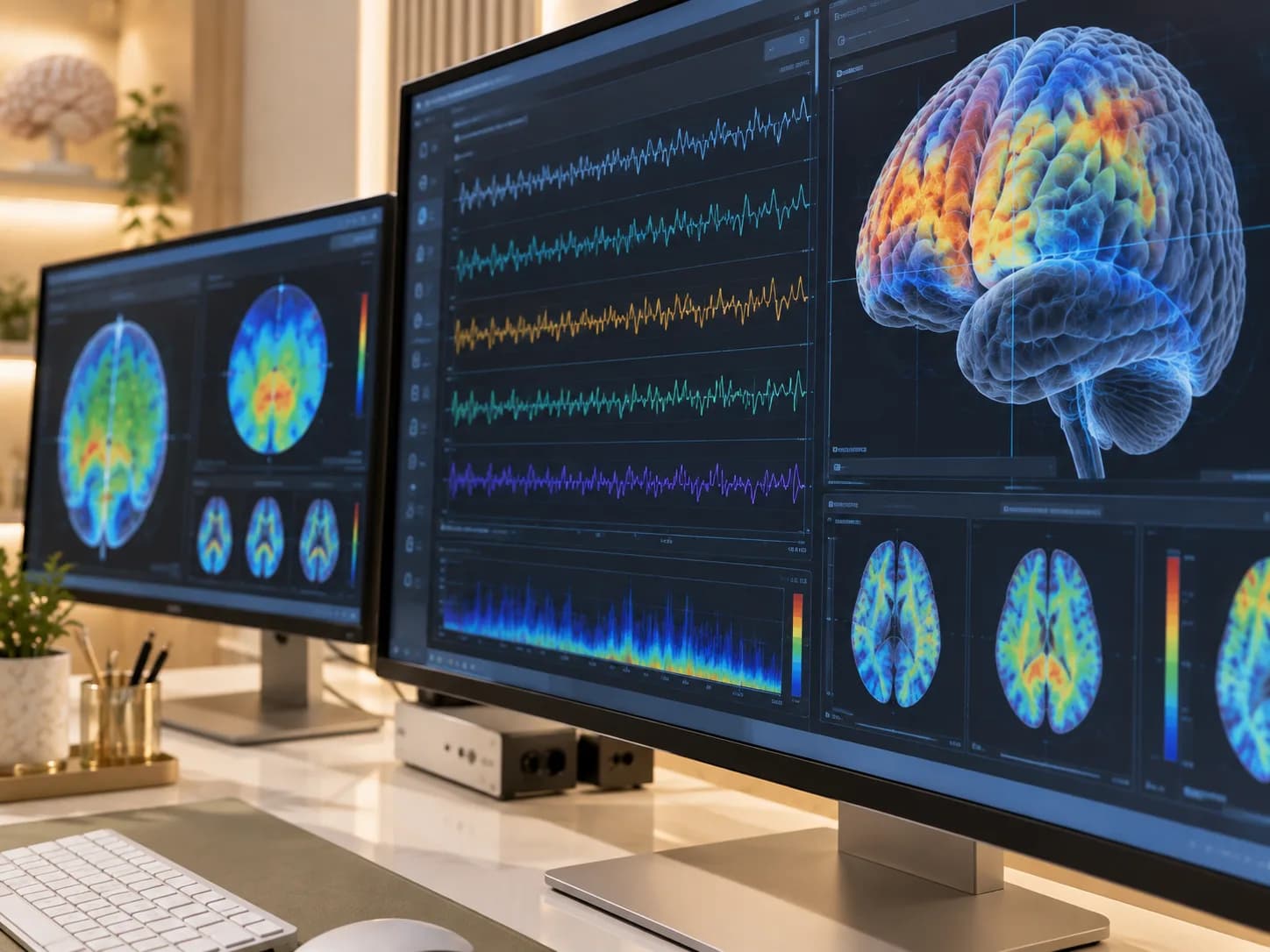
Neurotherapy is a broad term for approaches involving the nervous system. EEG neurofeedback is a specific training method that uses EEG signals to provide feedback.
Standard EEG recording is non-invasive and does not send electrical current into the brain. The equipment touching the scalp may cause some discomfort.
There is insufficient evidence that EEG neurofeedback generally treats brain fog. The cause of symptoms should be assessed before choosing care.
There is no number of sessions that guarantees results for everyone. Duration and follow-up depend on the training method, goals and individual assessment.
Neurofeedback presents electrical brain signals as feedback so participants can learn to regulate patterns of brain activity under specified conditions.
Studies of attention, concentration and sleep, including research published in JAMA Psychiatry and Brain and systematic reviews, illustrate both potential applications and limitations in effectiveness.
Some studies have found changes in brain signals or certain outcomes, but overall evidence remains insufficient to establish that neurofeedback consistently treats attention or sleep disorders in everyone.
A decision about neurotherapy should consider the individual’s health assessment, training objectives and relevant scientific evidence.
Westwood SJ, et al. (2025). Neurofeedback for Attention-Deficit/Hyperactivity Disorder: A Systematic Review and Meta-Analysis. JAMA Psychiatry.
Clinical Applications of Neurofeedback Based on Sensorimotor Rhythm: A Systematic Review and Meta-analysis. (2024).
Recio-Rodriguez JI, et al. (2024). Neurofeedback to Enhance Sleep Quality and Insomnia: A Systematic Review and Meta-analysis of Randomized Clinical Trials.
Schabus M, et al. (2017). Better Than Sham? A Double-Blind Placebo-Controlled Neurofeedback Study in Primary Insomnia. Brain.
Start with a health assessment and an EEG neurofeedback consultation to consider care options suited to your goals.